
College
How To Study In College: The Chip Away Strategy

 Preparation is critical when studying for a test. We all know the importance of test scores, they hold a heavy weight on semester GPAs.
But, the date you begin studying and how you study can make all the difference between a stressed-out week and excited confidence for the exam. So, when should you start studying for the upcoming test?
Chip Away Strategy
My strategy, and one used by many other successful and not stressed students, is called the Chip Away Strategy (I’m the only one I know who titles it this way). This strategy focuses on breaking down all the necessary test information into daily, manageable chunks of study time—to mentally chip away at the exam. And to answer my previous question, you should start studying by this method a week in advance.
You might be upset and think it is ridiculous to study all night for a week straight. Because that would be insane if you think of studying as three coffees, a Red Bull, and three hours of sleep. Instead, I want you to think of studying in a different way, like a normal activity that is necessary, but not torture. If you prepare a week in advance, you don’t need to, and shouldn’t, study more than three hours a day.
How To Study This Way
Day 1) Spend the first day gathering all your materials needed for the exam. Don’t spend more than one hour doing this activity. The purpose of day one is to get started and build momentum for the rest of the week, not burn out.
Day 2) Transfer your materials into a study guide that covers all the possible concepts that you could be tested on. This process will help you notice areas where your understanding is foggy, and help your familiarity with the material.
It could be as easy as transferring your notes from a notebook to a stapled packet. Or it could be harder, like if you missed class and need a classmate’s notes, or want to add on clarity to your notes.
This will probably be the longest day, but not more than three hours.
Day 3) Focus on the concepts that you don’t understand or vaguely remember. If you went through your materials and are not confident you fully understand some ideas, I recommend that you talk to your professor or a classmate that you trust. They will most likely be happy to help.
This preparation could take one to two hours.
Day 4, 5, 6) Spend two hours each day doing a comprehensive run through of your study guide. Quiz yourself and speak your answers out loud. The next day, quiz yourself and write down your answers. If you’re right, then move on. If you’re wrong, then go back until you get it right.
And when you’re checking, make sure you fully understand the concept. It’s easy to cheat yourself by remembering the answer because you just saw it, rather than grasping the content.
Day 7) I recommend little or no preparation on exam day. If you’re nervous and want to be safe, look over the hard concepts that you were unclear about in the beginning of your preparation. You want to go into the exam feeling fresh and confident. Let your preparation takeover, you already put in the work.
Say Goodbye To The All-Nighter
After this preparation, you’ll have a big advantage over your classmates, especially those who only studied the night before. There are multiple reasons why an all-nighter isn’t as effective.
First, you wouldn’t come close to covering everything in one night compared to a week’s time. You would have blind spots in the material that you hope the test doesn’t cover. Next, you just fried your brain hours before you need to use it to remember all the information on the exam. I’ve talked about how the brain needs time to recover. So, you’re going into the test without understanding all the material and a dazed brain. How are you supposed to get an A?
Plus, no one enjoys putting themselves through a whole night of crammed studying and anxiety. And, the next day or two is usually wasted in large amounts of sleep where your body recovers. If you’re still not convinced, the negative health effects may be the worst part of your late-night study binge.
Study Smarter And You Will Be Rewarded
Avoid stressing out all week, being miserable during the test, and worrying until the grade is released. Take your studying day-to-day for one week, chip away at each concept, and you’ll be ready to dominate the exam. You’ll feel better during the study process and you’ll put yourself on pace to achieve a high GPA. By studying this way, you can get rid of one of the most stressful and anxious aspects of college.
Remember that being prepared for an exam and executing are two different things. So after you’ve studied efficiently, get a refreshed on these dumb exam mistakes to do your best test taking.
The Chip Away Strategy is Rule #19 of 80 in my bestselling book How To College!

Summer is just around the corner and everyone seems to be getting ready for their internships. If for some reason or another you aren’t taking that path this summer, it’s completely fine. There are a bunch of things you can do over the next couple of months that will help build your resume for the next internship and job-hunting season.
Here are 5 of the best things you can do to for your resume this summer:
Volunteer
Volunteering is a great way to spend your summer. Employers love to see people who have taken the time to give back to their communities; it shows selflessness and initiative, as well as a capacity to work well with others and contribute in a group environment. It also alludes to your ability to make the office-community a friendlier and more cooperative place of work, something all companies want.
Best of all, you can pretty much choose any cause you want to devote your time to and it’ll look good. Things like animal shelters, soup kitchens, elderly homes, and little league are all great. Plus you’ll actually be helping your community while beefing up your resume, so it’s a win-win for everyone.
It’s also a great opportunity to develop new soft skills such as leadership, communication, problem-solving, and conflict resolution. Those words look great on a resume, and they can be acquired and honed in through your role as a volunteer. You’ll also acquire experiences you can talk about in an interview setting, and demonstrate your value through those stories.
However, if you are going to volunteer, it’s important to not only look for roles in causes you’re passionate about, but also where you’ll be able to acquire those skills. It’s painfully obvious when someone does something just to put it on their resume, and a disingenuous attempt at a summer volunteer job will be an easy catch. Most places are looking for volunteers anyway, might as well choose the ones that will give your resume some real added value.
Learn A Hard-Skill
The “skills” section of your resume can make or break an offer. Bosses want their employees to have at least the basic skills necessary to perform a job before they agree to bring them onboard, and this is especially true of online-tool literacy. Being able to put “expert” on a tool or program (and mean it), or better yet have a certificate demonstrating your mastery of it, can go a very long way.
So if for example your area of interest is business, a certificate in an excel course from a community college or reputable online website is huge. The same goes for designers and photoshop, mathematicians and matlab, and filmmakers and Premiere pro. Having the basics of these programs down will give you a leg up when it comes to applying for jobs that use them on a daily basis. It’s one less thing they would have to teach, and therefore one more reason to hire you.
There are a number of free and pay websites dedicated to providing online courses for students, many of whom also give certificates of completion. Codecademy is great for those who want to sharpen their coding and web-development skills, GCF is for learning excel and other online tools, and Khan Academy covers a wide range of concepts from math and finance, to the arts & humanities. Take advantage of these tools, and you’ll be in a much better position for future job openings.
Work – Don’t Intern
You don’t have to have an internship to “work” during summer. A part-time job is a great alternative to slap on a resume because it demonstrates drive and willingness take on responsibility. The extra cash can come in handy during the summer weekends too. Also, if you have a good relationship with your boss, you have a solid referral for when the next job opportunity comes around.
Also, similar to a volunteering position, you can acquire skills and experiences that will help build up your resume. The good thing about an actual job though, besides the getting paid of course, is that you can gain experience in real job-related fields such as sales, customer-service, management assistance, etc. Your experience in these can help differentiate you from others who haven’t had the the same exposure to real work in those areas.
Another option is to work on your own projects. This one is tough because it requires a lot of self-motivation and discipline on your part, but if something meaningful and material does come of it, it can prove a very attractive point on a resume. It also allows you to be your own boss, and put your energy towards something you’re interested in.
Finally, eligible students may not know that they can get work-study while taking classes during the summer. In general, schools determine who is eligible for work study based on your completed FAFSA application, contact your school to if out if your work study program extends into summer sessions to see if this is an opportunity for you.
Network
“It’s not what you know, it’s who you know”, we’ve all rolled our eyes at that one before. You can’t put the names of who you know on a resume, and most of the best places to work have strict merit-based hiring policies where favoritism is actively blocked- that’s part of what makes them the best. So how can networking help your resume?
A solid network (i.e. knowing the right people) is a fundamental part of a successful career. The important thing though is to approach it from a mentality of “who will help me be successful at my next job”, rather than “who can get me my next job”. If you’re successful in your role, your bosses will by default share in that success. That’s why besides looking for people with the right skills and experience, they will often seek out those who have the connections and knowledge of industry players to do their jobs well.
There are various ways to show you “know the right people” on your resume. One is to join an industry networking club or non-profit. Some fields will be more prone to this kind of planned, constructed, centralized networking. They usually operate through topic-specific events which are attended by people with different levels of seniority from many companies. If you say you’re part of that “club” it’ll imply that you have some connections in the industry you can speak of. Another way is to become involved in the alumni association of your school. It may not be industry specific, but again it implies you have relationships with professionals. The key to this is that it starts the conversation about networking, so that even if you haven’t met anyone of note at events, you can slide those who are worth mentioning into the conversation without making it too obvious you’re flexing those relationships.
Become An Expert In An Unrelated Topic
A resumes’ main objective is to show that your skills and experience match what the job requires, but it should also illuminate who you are as a person and whether you fit the company culture or not. This is where the “interests and activities” portion of your cv comes into play, and where learning about an unrelated topic can help you advance through the job market.
Employers want to see applicants who are motivated and “hungry” in their work, but also in other aspects of life as well. Most entry-level jobs come with a steep learning curve, and a person who is curious and diligent about their interests will probably be better able to apply those qualities to the challenges of a new job. Even more, an interesting topic on your resume allows you to demonstrate your knowledge on a subject in which you’re articulate. In other words, it gives you the opportunity to look smart.
There are plenty of articles, books, and documentaries you can learn from to get better acquainted with a topic of interest. If you want to bump it up a notch though, MIT and Stanford each have their own catalog of free courses that are actually taught at those universities. There are sites like Coursera and edX which offer courses from many schools too. These will give you high-quality college level understanding of a topic, all planned out, easily accessible, and mostly for free. It’s a great platform through which you can be productive and build your resume in the process.
At the end of the day what your resume will really do is provide talking points you can elaborate on for an employer. As long as those points are relevant, interesting, and make you look good, they’re worth your time. The key though is to be able to demonstrate how they have prepared you for the job you’re applying for. Whether it’s developing your soft or hard skills, volunteering, learning new things, working, or just being productive with your time- your resume should reflect a well-rounded person, and that means working hard during the summer even when you don’t have an internship.
Who should read a law school admissions book? Just every pre-law student who cares about getting into their dream school, minimizing debt, and having a successful legal career.
If none of that applies to you, then you should stop reading right now. See ya never.
On a serious note, these books offer practical, real-world insight from admissions officers and lawyers who have already gone through what you’re about to. So take their proven advice and run with it to gain an edge on your peers!
It’d be outright reckless to not take their advice. The logic of winging your entire law school experience because you didn’t feel like reading a book doesn’t work out well.
So get wise by picking up one, or all three, of the books mentioned below. Then take action to not only avoid costly mistakes, but to become a highly sought after candidate.
Using the wisdom in these books, you can increase your admissions chances tenfold!
Most Helpful Books For Pre-Law Students
1. How To Get Into The Top Law Schools by Richard Montauk
If you’re an ambitious hustler who has dreams of attending somewhere like Stanford Law, don’t mess around with any admissions book from the public library.
Do it right: get this book specifically constructed for undergrads striving to get admitted to the top law schools in the US.
The author lays out why top law schools are incredibly attractive, as they are competitive:
The reason it is so difficult to get into these schools is clear. The value of a law degree from a top school is immense. Graduates of top schools earn salaries that are, on average, double or triple (or more) of what graduates from lesser schools make. Increased salaries are not the end of the story. Greater career choice, increased job security, more interesting work, and numerous other benefits also result from a top law degree, so it is no wonder that so many people want to get into the best school they can manage.
For those who are up to the challenge, getting into the best law school you can is simplified with this guide. You’ll learn how to market yourself to schools, write a persuasive essay, ace interviews, and choose the right university, among other gems.
Funny thing is I’ve actually worked one-on-one with the author, Richard Montauk, when I was a college junior obsessed with going to law school.
Why did I call him first and eventually go through his expensive coaching calls? Because the content in his book made a significant impact in advancing my law school admissions strategy.
You don’t need to pay him for coaching, but you do need to read this book—especially if you want to go to a top 14 law school.
2. The Ivey Guide To Law School Admissions by Anna Ivey
This admissions guide comes from none other than Anna Ivey, the former dean of admissions at a top five law school—The University of Chicago Law School. In other words, like the most qualified person ever for answering admissions questions.
She masterfully takes the readers through how admissions officers think, points out how to improve your chances, and uses examples of actual applications to prove her points.
While Montauk’s book does include specifics, Ivey’s is broken down into easier to consume chapters of how to impress with your essay, resume, interviews, and more.
Even if you’re well read on this topic, Ivey’s book is a must read to get the edge where you’re application is lacking.
The fact a former head of law school admissions at a spectacular school has a book out should be motivating enough.
If you’re smart, you’ll read it three times over to soak in all the useful content. I would!
3. One L by Scott Turow
This book is the odd out being that it’s not focused on improving your admissions chances.
Instead, reading One L tells the true story of covers an entirely different topic: what it’s really like to be a first year at Harvard Law.
Where it’s relevant is you’ll then be able to answer the questions, should you go to law school? Would you enjoy it? Is it right for you?
These are the answers you better know if you’re going to invest, give or take, three years and hundreds of thousands of dollars in debt to become a lawyer.
I won’t spoil the book too much. But when the classes are overly demanding and the pressure mounts, some first year law students can’t handle it.
Wouldn’t you know what it’s like at the nation’s top law school before you try to get into one? That’d make sense. Read One L and reflect on if this is the path for you.
If it isn’t, you just saved yourself from misery. If it is, you’ll walk away with further clarity that you’re entering the right career. Both are equally valuable given whatever side of the coin you fall.
Law School Preparation Pays Off
By failing to prepare, you are preparing to fail. ― Benjamin Franklin
It happens time after a time. A young undergrad or working professional decides, once and for all, to attend law school.
But they don’t take the necessary steps to win. And the way you come out victorious in the law school admissions cycle is by getting accepted to your top schools, receiving scholarships, and having the leverage to choose where you’re going to school.
Here’s the difference.
The average applicant looks at applying as a checklist. “Oh, I have to do this, ugh. Ok I’ll just put this together. Let’s hope for the best!”
The winning applicant looks at applying from an entirely different vantage point. They see it as a full-encompassing personal marketing strategy that’s geared at every angle so they shine in the best light. Their resume, recommendations, personal statement are all put together with purpose.
It’s obvious why they come out with the most acceptance letters, and go to the most prestigious schools.
Are you going to win or lose? It’s a choose of preparation.
So read one of the books above and you’ll be more likely to win.
Related: Why I Turned Down Harvard Law School
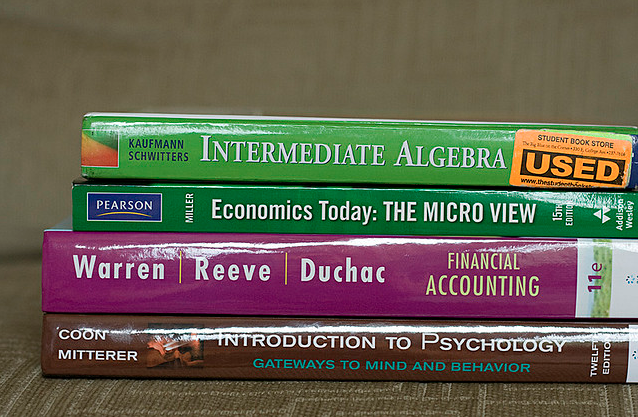
source: THEMACGIRL*
This is a guest post by Euan Swan.
The summer is winding down and transitioning to a new year at college. With a new beginning, comes many new experiences and challenges ahead.
If you are entering college as a freshman this fall, good luck, have fun, and remember – take it easy. Speaking as a junior in college, the last thing you want to do is stress yourself out as soon as you arrive. A good way to transition is to introduce yourself to your neighbors; you’ll be seeing them a lot this coming year.
When engaging in small talk, you will more than likely get asked, “What’s your major?” It seems this is one of everyone’s first questions. While it can be a good conversation starter, it usually gets old fast.
However, discussing your major over and over again helps you reflect if it’s actually right for you. Let me share a story to expand upon what I mean.
My Personal Journey Through Majors
Going into college, I thought I had to have everything together. I thought I had to have my major decided, know which minors I wanted to complete, as well as get involved as much as I could. I quickly realized this mentality stressed me out.
If you to go to university in the U.K. (where I was born), you have to decide your major (even though it isn’t called that over there) you want to pursue, right away. Changing your field of study half way through your program, or even after one semester, is often seen as a sign of inconsistency and looked down upon. Therefore, people who study in the U.K. rarely change their major, if ever.
Now that I attend college at Indiana University in the U.S., I have begun to realize that changing your major multiple times is commonplace.
I was one of these people, and worried if I really wanted to study my first major, marketing.
I took a couple of prerequisite courses for the marketing program before deciding to change my major to finance. I changed it to finance because I started to think what my income would look like after I graduate, and I realized that a career in finance would pay more.
After taking two finance courses, I quickly realized the subject definitely wasn’t my strong suit. Sure if I practiced it, I could get better, and possibly graduate with a finance degree and land a high-paying job. But, I would hate myself. I would be doing something that I didn’t enjoy.
That’s why I decided to change my major back to marketing. I knew that I enjoyed marketing, but wasn’t sure how far a marketing degree could take me. I stayed in the marketing program for some time, but once again I needed a change.
So, I chose to pursue and am currently a management major. I do enjoy marketing, but I felt management suited me better. I have always been the guy to desire a handle on everything, and a management major gives me that satisfaction. I also decided to pursue an entrepreneurship and small business minor, due to my entrepreneurial mindset.
After staying with my major and minor for the past semester, I can now say with certainty that I am set in my decision. Especially after interning for a Fortune 500 company this past summer, I learned that your degree is sometimes just an admission ticket through the door.
Think Of It This Way
Say for example that you graduate from college with a degree in economics. You graduate with a 3.8 GPA. After a year, you can’t find a job where you can implement what you learned in studying economics. You realize that you are really good with people though, so you decide to apply for a human resources position at Company X.
You receive an interview request from Company X and you decide to go for it. Company X enjoys your warm personality and feels you would be a beneficial asset to the company. They decide to take you on.
After your first two weeks of learning the ropes, you are handed your first big project. This project has nothing to do with economics, but instead, will require a lot of interpersonal communication. You can’t use what you’ve learned from your college studies in this project, but what you can use is your work ethic.
In hiring you, Company X saw that you had a high work ethic, due to your high GPA. They also felt that you had a friendly personality. Even though you had an economics degree, Company X knew that you could excel in a human resources position.
That leads me back to my point. Sometimes your degree doesn’t necessarily matter to an employer, as it is just an admission ticket through the door. What matters is whether or not you have a drive to succeed, and at the end of the day, deliver results. Although this kind of hiring mentality may apply to most companies, there are still those firms who adopt a more “knowledge-centric” approach.
For example, if you’re a finance major trying to get a job at PWC or Deloitte, then you will have to have a high work ethic, followed by an impressive resume with a strong educational background. At most other companies though, your degree doesn’t hold as much weight.
Companies want results, and if you can deliver those results, regardless of your college major, then you will find a job, end of story.
You shouldn’t worry about whether or not you chose the right major your first time around. I certainly didn’t!
Choose a major to see if you like it, and if you don’t, you still have time to change it to something else.
That’s something that I like about the American education system. There is so much flexibility in changing your field of study. If you end up not enjoying your major, you have the opportunity to change it. If you do not like it again, you can change it once again.
Keep in mind that your major is not everything these days though. In today’s economy, there are hundreds of thousands of graduates coming out of universities every year. That means the job market for college graduates is saturated. So, a college degree doesn’t guarantee career success.
Back when the figure of graduates was a lot smaller, a degree meant a lot more. That’s why I mentioned earlier that your particular degree doesn’t matter as much as the results that you can deliver.
Choose a major you think you will enjoy in college, but also one that will drive you to work hard.
Make sure that you can leverage the knowledge that you will gain from that major in the real world though.
So, relax, enjoy, and experience all that the college life has to offer you. Let your interests carry your decision on what your final major choice will be, and understand that your final decision doesn’t lock you into a specific job after you graduate.
And you can always go back to school at a place like Excelsia College Online for a postgraduate degree. Don’t sweat this decision too much!
How To Make $200k In 1 Year At 24 Years Old
How To Set Goals You Can Actually Achieve
Prediction: These Will Be The 5 Biggest Winners Of 2018
Brian Robben’s Top 9 YouTube Moments Of 2017
I Launched A New Website!
10 Rules For Maintaining The Best Online Store You Can
How To Start A Business When You Are In Debt
10 Ways the Successful Entrepreneurs Avoid Burnout
10 Best Entrepreneurship Areas From 2018 To 2020